Gold ETF vs Physical Gold in Canada: Which Should You Own?

Gold ETF vs physical gold in Canada is the first real decision a Canadian gold buyer makes — and it is not really an argument about gold. Both routes follow the same world price. What differs is what you actually own, what it costs to hold, how you get out, and what happens inside a registered account. This guide walks through the Canadian specifics, including the two questions forum readers ask most: whether fund units can be swapped for real bars, and whether the funds really hold the metal.
What you own with each option
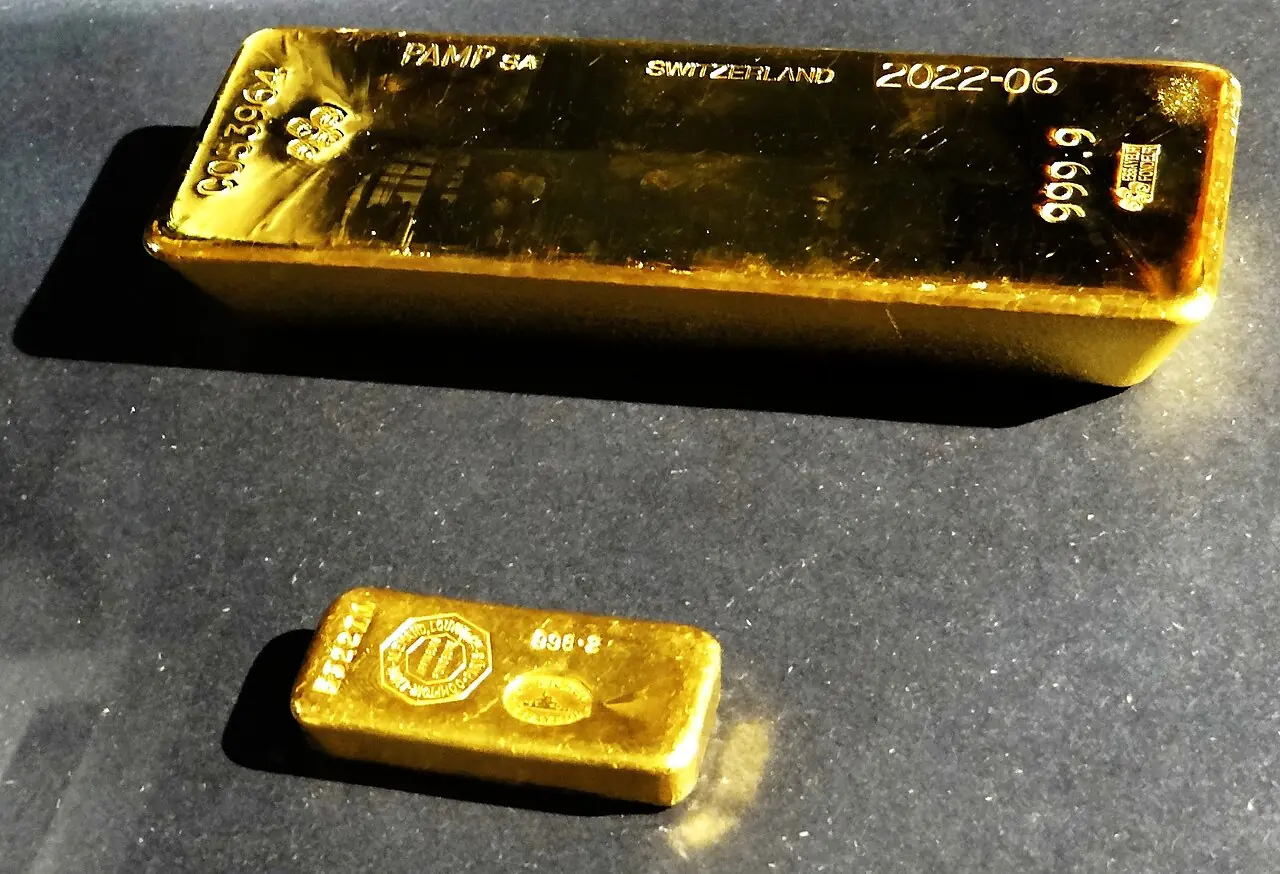
Physical gold is bars and coins you own outright — a 1 oz Gold Maple Leaf or a sealed bar from a recognized refiner, held by you or in a vault you pay for. There is no company between you and the metal.

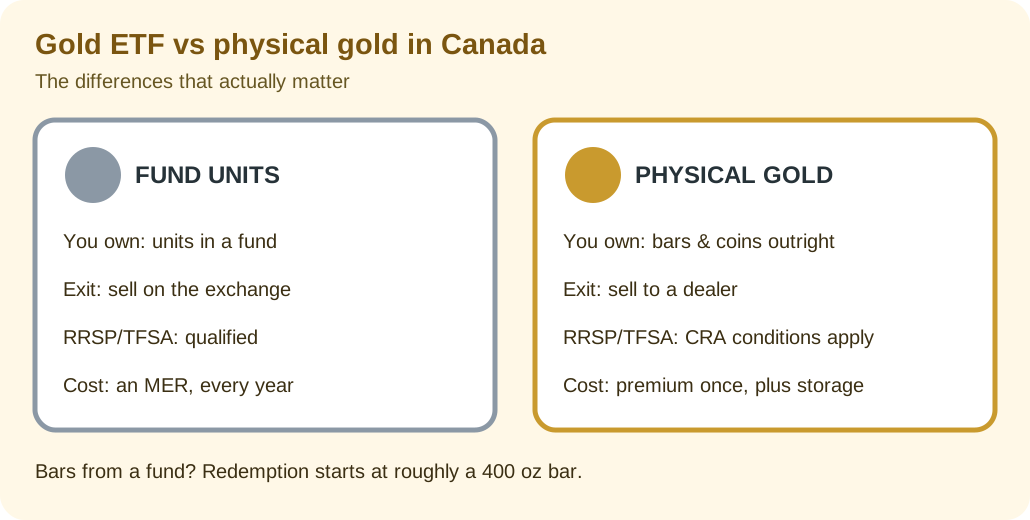
Fund products are securities you buy through a brokerage account. Canada's physically backed family includes bullion ETFs from bank and asset managers, Sprott's PHYS — a closed-end trust whose allocated bars are stored at the Royal Canadian Mint — and the Mint's own MNT exchange-traded receipts, backed by gold held at the Mint. With all of them you own units or shares in a structure that holds gold; you do not own specific bars yourself. Miner ETFs are a different animal again — they hold mining companies, not metal, and this guide is about bullion products only.
Can you exchange gold ETF units for physical bars?
This is the exact question asked about MNT on investment forums, and the honest answer is: technically yes for some products, practically no for almost everyone.
PHYS lets unitholders redeem for physical bullion, but the minimum redemption is institutional in size — roughly the value of a full 400 troy ounce London Good Delivery bar — with monthly deadlines, paperwork, and the logistics of taking delivery of a bar worth well into six figures at today's prices. The Mint's receipt program has its own redemption windows and minimum amounts set by its terms, which you should check before relying on them. Ordinary open-end bullion ETFs generally do not hand bars to retail holders at all: large authorized participants redeem in cash or in kind behind the scenes, and everyone else simply sells units on the exchange.
So plan on the exchange being your exit. Redemption exists mainly so that big players can keep the market price close to the value of the gold — it is an arbitrage mechanism, not a delivery service for small holders.
Do gold ETFs really hold the physical gold?
The second forum question — whether you can trust that a fund holds enough metal — deserves a straight answer. Physically backed Canadian products hold allocated bars: specific, serial-numbered bars in a named vault, held for the fund, not lent out. PHYS publishes the arrangement plainly — its gold sits at the Royal Canadian Mint — and funds of this type are independently audited, with bar lists and inspection reports available to read. That is a very different risk picture from an unallocated claim, where you are simply a creditor of a bank's general gold pool.
The documents exist, so use them: before buying any fund, read its page and prospectus for four things — who the custodian is, whether the metal is allocated, when it was last audited, and whether a bar list is published. If a product won't say, that is your answer about that product.
Gold ETFs vs physical gold in an RRSP or TFSA
Fund units are the easy route: listed securities are qualified investments, so any self-directed RRSP or TFSA can hold them.
Physical metal is possible but rule-bound. The CRA's Income Tax Folio S3-F10-C1 (paragraphs 1.51–1.54, reflecting Income Tax Regulations 4900(1)(t)–(v)) sets the conditions: legal-tender gold coins produced by the Royal Canadian Mint with a purity of at least 99.5%, whose price may not exceed 110% of the value of their metal content — a rule that deliberately shuts out collectible coins — bought from the Mint or from a specified corporation such as a bank or trust company, with similar conditions for bars from recognized refiners. The metal must sit inside the plan's trustee and custodian arrangements. You cannot buy a bar yourself and then "put it into" your RRSP: the plan has to acquire qualifying metal properly, through a trustee set up for bullion, and specialist storage and administration fees apply.
Costs: premium once, or a fee every year
Physical gold charges you once, at the door: the premium over spot when you buy, and a dealer's discount under spot when you sell. Store it yourself and there is no annual fee; use a vault and you pay storage and insurance.
Funds charge a small annual management fee (MER) every year you hold them, plus the bid-ask spread when you trade. On a large holding held for a decade, a few tenths of a percent a year adds up to real money; on a small holding, it is usually cheaper than insuring a home safe. Neither is "free" — they just bill you at different times.
So which should a Canadian choose?
Choose fund units if you want one-click buying and selling inside a brokerage or registered account, small amounts, and no storage decisions. Choose physical gold if you want an asset with no counterparty, you are comfortable storing it, and you accept wider buy-sell spreads and more legwork when you sell — our guide to how to buy gold in Canada covers doing that safely. Many Canadians hold both: units for flexibility, a few coins or a bar from our gold bar prices page for the metal itself. Check the live gold price today in Canada before pricing either route.
This guide is general education, not financial advice. Fund structures, fees and tax rules change — read the current prospectus and the CRA folio before you buy.
Frequently Asked Questions
Is there any gold ETF or mutual fund I can trade in for actual physical gold bars?
Only in a limited sense. Sprott's PHYS trust allows redemption for bullion at roughly a 400-ounce scale, and the Royal Canadian Mint's receipt program has redemption terms of its own. Regular bullion ETFs do not deliver bars to retail holders — you sell your units on the exchange instead.
Do gold ETFs actually hold enough physical gold?
Physically backed Canadian products hold allocated, serial-numbered bars with a named custodian, subject to independent audit, and several publish bar lists. Check the custodian, the audit and the bar list for the specific product — and prefer allocated structures over unallocated ones.
Can I hold physical gold in an RRSP or TFSA in Canada?
Yes, if the metal meets the CRA's conditions — Royal Canadian Mint legal-tender coins of at least 99.5% purity priced within 110% of their metal value, or qualifying bars — bought through the plan from the Mint or a specified corporation and held by the plan's custodian. Specialist trustees offer this, for a fee.
Can I put gold I already own into my RRSP?
Not by handing over your own bars. The plan itself must acquire qualifying metal through its trustee under the CRA's conditions. Moving your personal metal in informally can make the holding non-qualified and taxable — set the account up properly first.
Which is cheaper over ten years?
It depends on size. Physical gold costs a premium going in and a discount coming out, plus any storage you pay for. A fund costs its MER every year. On a small holding the fund usually wins on cost; on a large, long-held position, self-stored physical gold often does. Run both sets of numbers for your amount before deciding.