How to Store Gold Safely at Home in Canada
Gold does not rust, tarnish or expire — but it can be stolen, lost in a fire or flood, or forgotten in a drawer nobody knows about. Where you keep it matters as much as what you paid for it, and the right answer depends on how much you own, how often you need access, and how much risk you can live with. This guide compares the three realistic options — a home safe, a bank safety deposit box and an allocated vault — plus a checklist you can use today.
The first decision is not which safe to buy, but how much gold you hold and what it is worth. A single coin and a six-figure collection deserve different answers, and the cheapest option is not always the safest.
The risks you are protecting against
Four risks drive every storage decision. Theft is the obvious one: gold is small, valuable and hard to trace, and break-ins target exactly that. Fire and water come second: a house fire or flooded basement destroys paper records and damages packaging, even though gold itself survives extreme heat. The third risk is quieter — loss through forgetfulness, a move, or unknown ownership. The fourth is resale damage: scratched coins, opened packaging and missing certificates reduce what a dealer will pay.
Option 1: a home safe, done properly

A home safe gives instant, 24-hour access and no ongoing fee, which suits small holdings and gold you may want to sell quickly. Done properly, it means a safe bolted to concrete or a floor joist — an unbolted safe is a convenient carrying case for a burglar — with a fire rating of at least one hour and a water-resistant seal. Keep it out of the master bedroom, and tell as few people as possible that it exists.
Protect the metal inside too. Keep bars and coins in sealed assay packaging, add silica gel for humidity, and never store gold in a basement that floods or an attic that bakes in summer. Photograph each item, record weight, purity, serial number and price, and keep that inventory elsewhere — a password manager or a lawyer's file. If the safe is ever stolen, that inventory is what your insurer and police need.
Home storage has real limits. A residential safe will not resist a determined, equipped burglar for long, and a standard home policy usually caps jewellery and precious metals at a low sublimit — often only a few thousand dollars — unless you buy a rider. Above that sublimit, home storage without extra insurance is uninsured storage.
Option 2: a bank safety deposit box
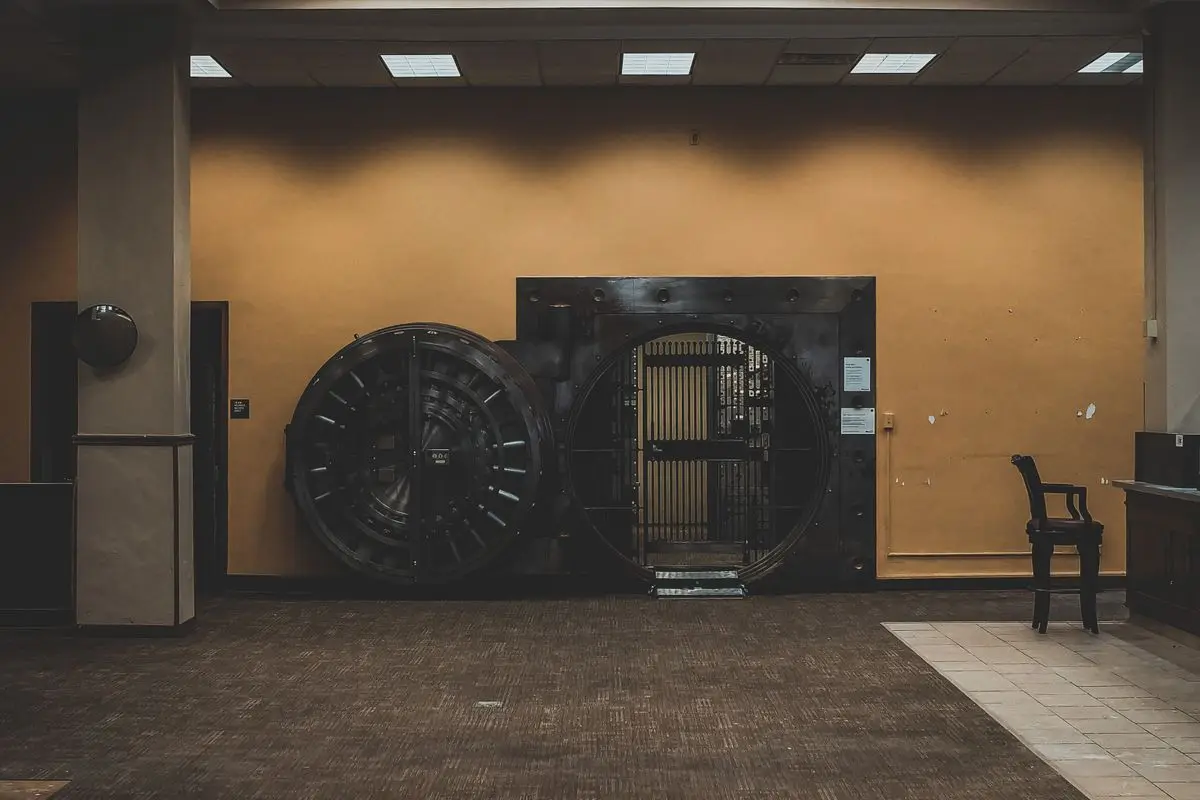
A bank safety deposit box is the middle option: far more secure than a home safe, with a modest annual rent. Canadian banks typically charge roughly $60 to $350 per year depending on box size and branch, and major-city branches often have waitlists. Access is limited to banking hours — you cannot reach your gold on a weekend or holiday when markets move.
The catch most owners miss is insurance. A bank does not insure the contents of your safety deposit box — the box is a locked space, not an insurance policy. If contents are lost, damaged or stolen, the bank's liability is minimal, and your home insurance may not extend to items held at the bank. You need a separate policy or rider naming the stored items and their value. Confirm what the bank permits: most prohibit cash and hazardous items, but bullion is normally accepted.
Option 3: allocated vault storage
Professional vault storage is the standard for larger holdings, and two words matter. In allocated storage, your specific bars and coins are held separately, identified by serial number, and remain your property even if the vault operator fails. In unallocated or pooled storage, you own a share of a pool, not specific bars, and you are a creditor of the operator if it fails. For gold you intend to keep for years, allocated storage is safer — ask for it by name and get it in writing.
Vault fees are usually a percentage of value per year. Dealer guides report roughly 0.1% to 1.5% annually depending on facility and holding size, typically including insurance for the full market value and 24-hour security. On a $50,000 holding, 0.5% is $250 a year — comparable to a bank box plus a separate insurance rider, with far stronger protection. The trade-off is access: no Sunday-afternoon access, and payment every year whether the price rises or falls.
For another plain-language comparison, see Gold Stock Canada's 2026 gold storage guide.
Cost comparison: what each option really costs
| Storage option | Typical annual cost (CAD) | Insurance | Access | Best for |
|---|---|---|---|---|
| Home safe | $0 after a one-time safe purchase ($300–$2,000) | Separate rider required | Instant, 24/7 | Small holdings, quick access |
| Bank safety deposit box | About $60–$350 per year | Not included — arrange separately | Banking hours only | Moderate holdings, low budget |
| Allocated private vault | About 0.1–1.5% of value per year | Usually included | Scheduled or next-day sale | Larger holdings, long-term holders |
| Unallocated pool storage | About 0.25–0.75% of value per year | Typically included | Good for selling | Trading convenience only |
Compare like with like: a bank box looks cheap until you add its required insurance rider, and a vault looks expensive until you count the insurance it includes.
Insurance: the step most owners skip
Call your home insurer before assuming you are covered. Ask three questions: what is the sublimit for precious metals, does it cover items stored at home and at the bank, and what proof of value is required for a claim? Most insurers ask for photographs, purchase invoices and, for larger holdings, an appraisal. A scheduled-items rider raises the limit to the appraised value, and is usually the cheapest way to insure a home holding.
Revalue your coverage as the price moves. A holding insured for $20,000 when gold was lower may be worth far more today, and a claim pays the policy limit, not the current value. Review the rider yearly, and update it after every significant purchase. Keep copies of the inventory and policy outside the house — with your insurer or lawyer.
Splitting storage, access and estate planning
Many experienced owners split their holdings: a small amount at home for quick access, the bulk in a vault or bank box. No single theft or disaster then takes everything. Keep one master inventory of where each item is held, and make sure one trusted person — spouse, executor or lawyer — knows it exists and how to find it. Gold nobody knows about is gold thrown away during a move or an estate cleanout.
Never write safe combinations or vault passwords on paper stored beside the safe, and never share your storage location on social media. Discretion is a security measure: most residential gold thefts start with someone knowing the gold is there.
Home storage checklist
- Safe: bolted to concrete or a joist, fire-rated one hour or more, water-resistant, hidden outside the master bedroom.
- Packaging: bars and coins sealed in assay packaging, silica gel for humidity.
- Inventory: photo, weight, purity, serial number and price for every item, stored outside the home.
- Insurance: sublimit checked, rider in place if needed, revalued annually.
- Access: one trusted person knows the inventory exists; combinations never stored beside the safe.
- Review: once a year, check the safe, seal, inventory and insurance together.
If any item on that list is missing, fix it before you buy more gold. Storage is the cheapest part of owning gold and the most expensive to get wrong. See also our guides to gold dealers in Canada and our guide on selling gold in Canada, and check the live value of your holding on our gold price today page.
FAQ
Is it safe to store gold at home in Canada?
Yes for small holdings, if the safe is bolted down, fire-rated and hidden, and the holding is covered by a rider above your home policy's sublimit. For larger holdings, a bank box or allocated vault is safer.
Does a bank insure my safety deposit box contents?
No. A bank safety deposit box is a locked space, not an insurance policy, and the bank's liability for contents is minimal. Arrange a separate policy or rider naming the items and their value.
What is the difference between allocated and unallocated vault storage?
In allocated storage, your specific bars and coins are held separately by serial number and stay your property if the operator fails. In unallocated storage, you own a share of a pool and are a creditor of the operator.
How much does gold vault storage cost in Canada?
Dealer guides report roughly 0.1% to 1.5% of stored value per year for allocated vault storage, usually including insurance. Bank boxes cost roughly $60 to $350 per year but exclude insurance.
What records should I keep for gold I store?
Photograph each item and record its weight, purity, serial number and the price you paid, then keep that inventory somewhere separate from the gold itself — a password manager or a lawyer's file. If the safe is ever stolen, that inventory is what your insurer and the police will need.