Capital Gains Tax on Selling Gold in Canada: The CRA Rules
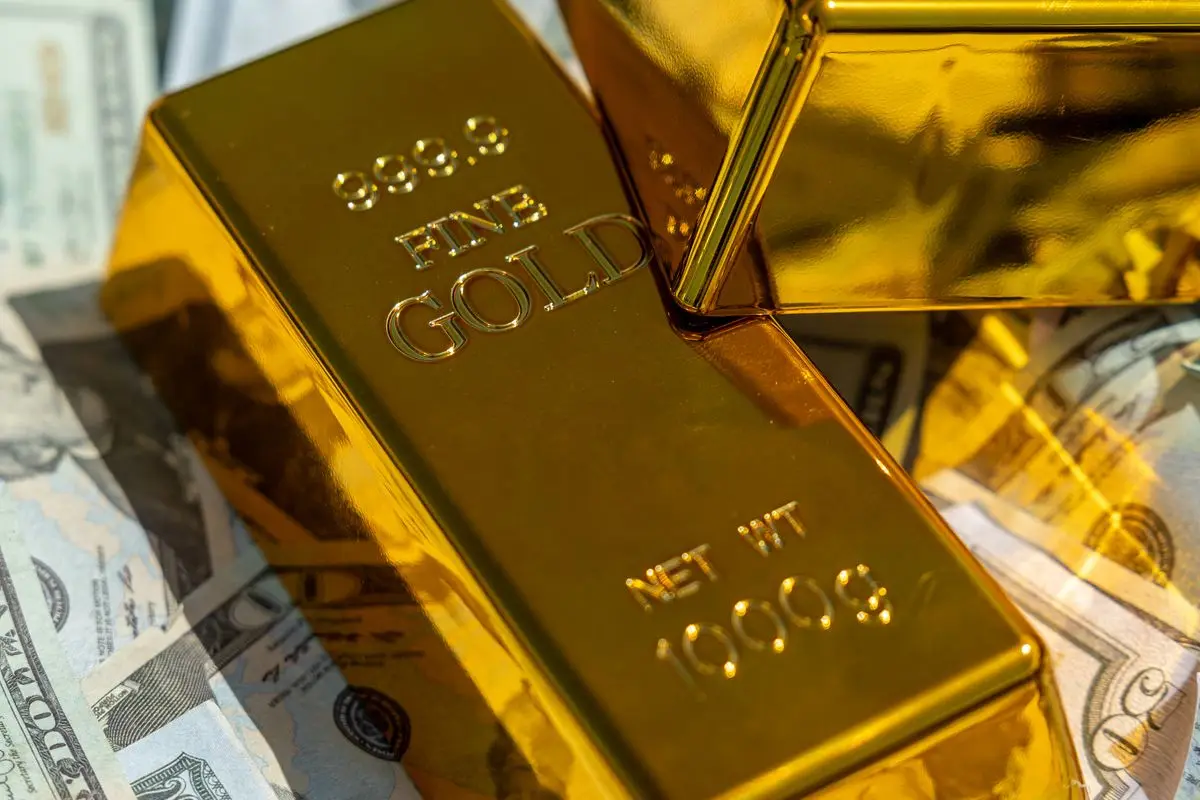
Capital gains tax on selling gold in Canada catches people out because the purchase felt so simple — investment bullion is even exempt from GST/HST. But buying and selling are taxed under different rules, and the selling side belongs to the Canada Revenue Agency's capital gains system. This guide covers how the CRA treats a sale, the inherited-jewellery case that forum readers ask about most, and what to do with scrap gold.
General information only, based on CRA rules as published — not tax advice. If real money is involved, confirm your situation with a Canadian tax professional.
First question: capital property, or a business?
For most individuals, gold bought and held as an investment is capital property. Sell it for more than it cost you and the profit is a capital gain: half of the gain is added to your income for the year and taxed at your marginal rate. There is no separate gold tax rate, and no minimum holding period — the same treatment applies whether you held the bar for a month or a decade.
The exception matters if you trade actively. If buying and reselling metal is effectively a business for you — frequent transactions, short holding periods, metal bought with borrowed money and an intention to flip — the CRA can treat the whole profit as business income, taxed in full rather than at the half-inclusion of a capital gain. Ordinary investors who buy, hold and occasionally sell are not in that territory, but frequent scrap buyers take note below.
How the gain is calculated
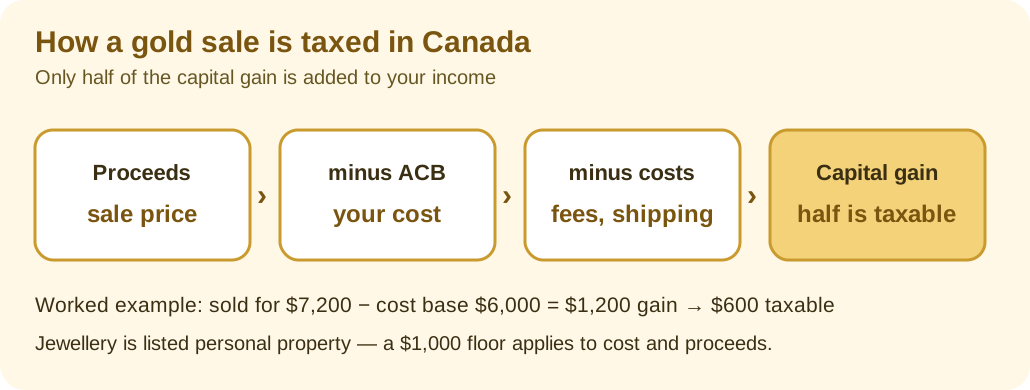
The formula is: proceeds of disposition − adjusted cost base (ACB) − selling costs = capital gain. Your ACB is what you paid, including the dealer's premium — one more reason to keep the invoice. Selling costs, like a dealer's commission or shipping to a buyer, come off the proceeds side of the calculation.
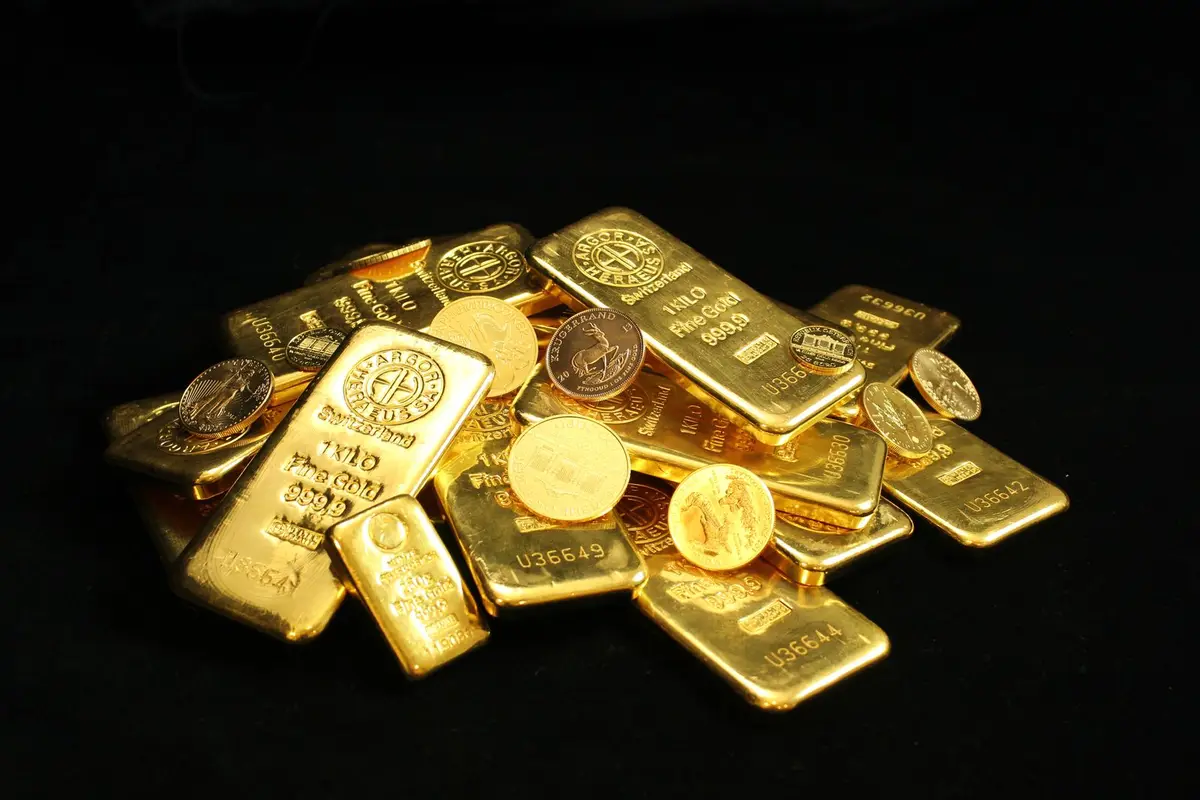
Two refinements. First, if you own several identical items — say ten 1 oz Gold Maple Leafs bought at different times — the CRA's identical-property rules pool them at an average cost rather than tracking each coin separately. Second, dealers do not issue you a capital gains tax slip for a bullion sale. The reporting obligation is yours, on Schedule 3 of your return, whether you sold to a dealer, a coin shop or a private buyer. Our guide to selling gold in Canada covers the selling process itself, and the sell gold estimator shows what a sale returns before tax.
I inherited jewelry then sold it. Is this money taxable?
This is the question from the tax forums, and the answer has two halves — because Canada taxes the estate, not the heir.
Canada has no inheritance tax. You do not report inherited jewellery as income. Instead, when a person dies, the Income Tax Act deems them to have disposed of their capital property at fair market value immediately before death (the "deemed disposition" rule), and any gain up to that point is settled on the deceased's final return, paid by the estate.
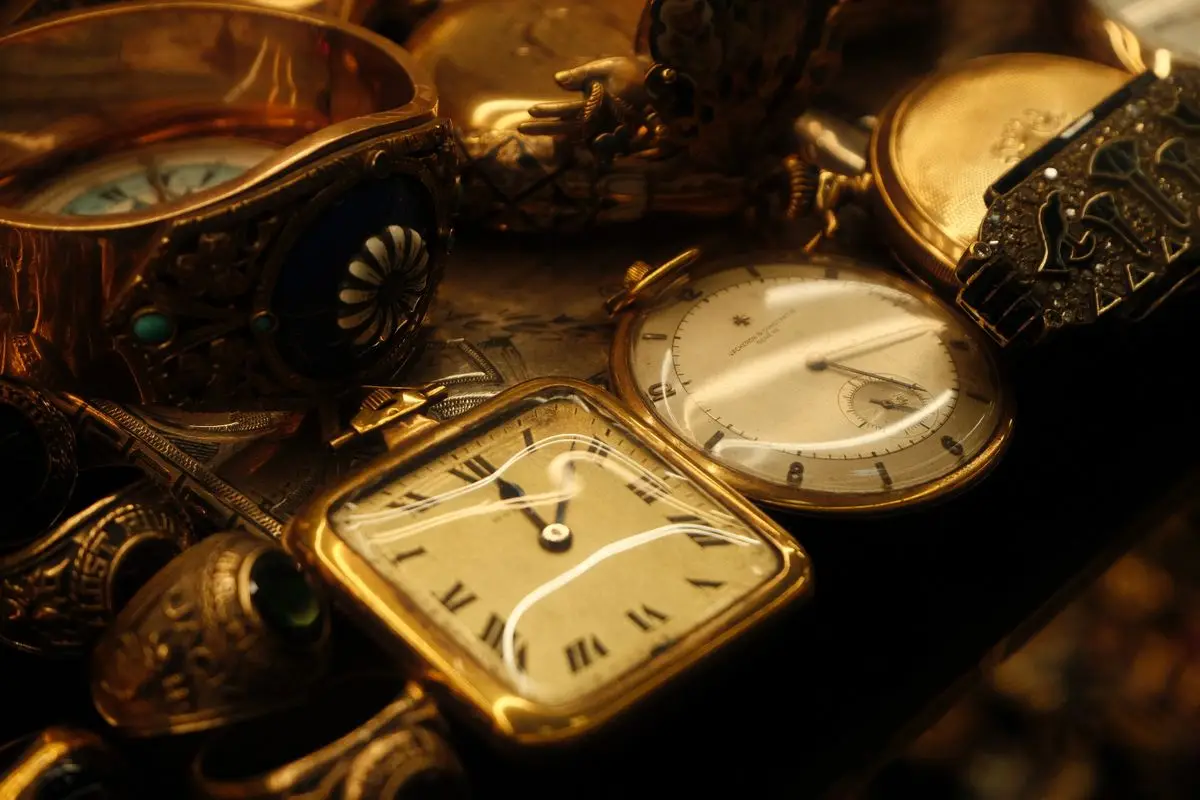
That deemed value becomes your cost base. If your mother's gold necklace was worth $6,000 on the date of her death, your ACB is $6,000 — whether she paid $600 for it in 1985 or not. Sell it later for $7,200 and your capital gain is $1,200, of which half is taxable. Sell it for $6,000 or less and there is no gain at all. This is why getting the jewellery valued at the date of death — an appraisal, or at least dated photographs and the estate's records — is worth real money later.
The listed personal property rules for jewellery
Jewellery and coins are specifically named in the Income Tax Act as listed personal property (LPP) — personal-use property that tends to hold or grow in value. Two special rules follow:
- The $1,000 floor. When calculating a gain on personal-use property, both your cost and your proceeds are deemed to be at least $1,000. Sell a small inherited piece for $900 that cost (or was valued at) $700, and the deemed numbers are $1,000 and $1,000 — no gain to report. Many small inherited pieces fall entirely under this floor.
- Losses are ring-fenced. A loss on listed personal property can only be applied against gains on other listed personal property — carried back 3 years or forward 7 — not against gains on shares or real estate. A loss on ordinary personal-use property that isn't listed property can't be claimed at all.
Do you pay taxes on selling scrap gold in Canada?
Yes — the same framework applies, and this is the point scrap sellers most often miss. Selling broken jewellery, dental gold or scrap to a dealer is a disposition, exactly like selling a bar. If the scrap was yours personally, the listed personal property rules above apply, including the $1,000 floor. If you bought the scrap as an investment, it is capital property and a gain over your ACB is taxable. And if you make a habit of buying scrap to melt and resell, that pattern can make you a trader in the CRA's eyes, with profits taxed as business income instead.
One practical warning: a dealer paying you cash does not make the sale invisible or tax-free. Large cash transactions carry their own FINTRAC reporting rules for the dealer, and none of that files your taxes for you — the gain, if there is one, is still yours to report.
Records to keep
- Purchase invoices showing date, weight, purity and price paid — this establishes your ACB.
- For inherited pieces: the date-of-death valuation, appraisal or estate documents, plus photographs.
- Sale receipts from the dealer or buyer, with the date and amount.
- Your ACB workings if you own identical items bought at different prices.
Keep them with your tax records for the year of the sale. If the numbers are large, or an estate is involved, the CRA's own capital gains guide (T4037) and a tax professional are the next step — our Canada gold FAQs cover the purchase-side taxes (GST/HST exemption and provincial jewellery tax) that pair with this guide.
Frequently Asked Questions
Do I pay capital gains tax when I sell gold in Canada?
Generally yes, if you sell for more than your adjusted cost base. For an individual holding gold as an investment, the profit is a capital gain and half of it is added to your income at your marginal rate. There is no separate tax rate for gold and no minimum holding period.
I inherited jewelry then sold it. Is this money taxable?
You owe no tax on inheriting it — Canada has no inheritance tax, and the estate settles any gain up to the date of death. Your cost base is the jewellery's fair market value at that date, so you are only taxed on growth above that value when you sell, subject to the $1,000 personal-property floor described above.
Do I pay taxes on selling scrap gold in Canada?
Yes, potentially. A scrap sale is a disposition like any other. Personal scrap jewellery falls under the listed personal property rules (including the $1,000 floor); scrap bought as an investment is capital property; and habitual buying-and-reselling can be taxed as business income.
Does the dealer report my gold sale to the CRA?
Dealers do not issue capital gains tax slips for bullion or jewellery sales — calculating and reporting the gain on Schedule 3 is your responsibility. Separate anti-money-laundering rules (FINTRAC) apply to large cash transactions, but they don't file your return for you.
What if I sell my gold at a loss?
For investment bullion held as capital property, a capital loss can offset other capital gains. For jewellery and coins — listed personal property — a loss can only be used against gains on other listed personal property, carried back 3 years or forward 7. Losses on non-listed personal-use property can't be claimed.